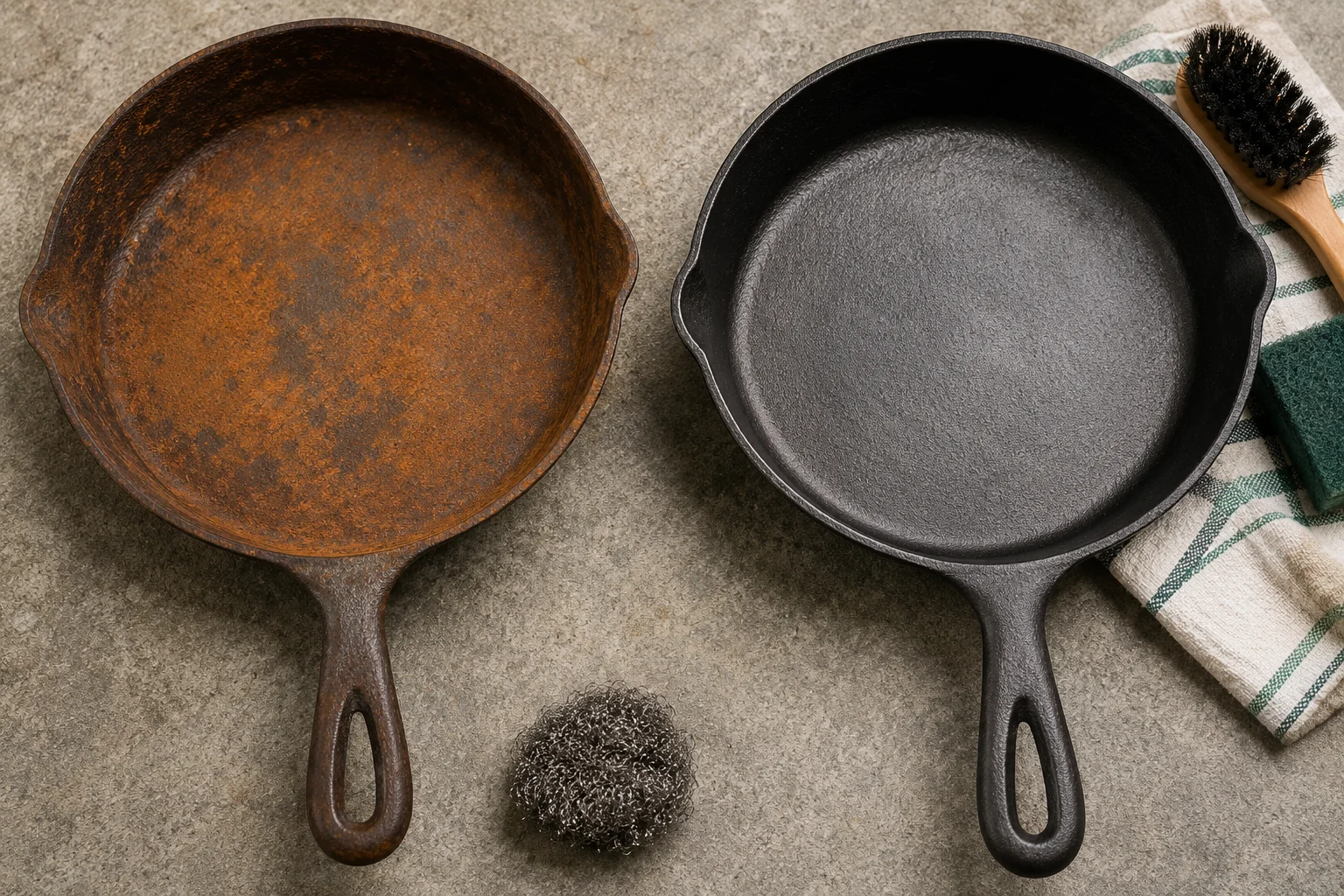
Discovering rust stains in your trusted cast iron skillet may be quite disappointing but cheer up! In this article, we will show you how to bring your rusty cast iron back to life and make it last long. We will explain what causes rusting and give the most effective ways of removing rust stains and seasoning your pan again.
Understanding Rust on Cast Iron
What Causes Rust on Cast Iron?
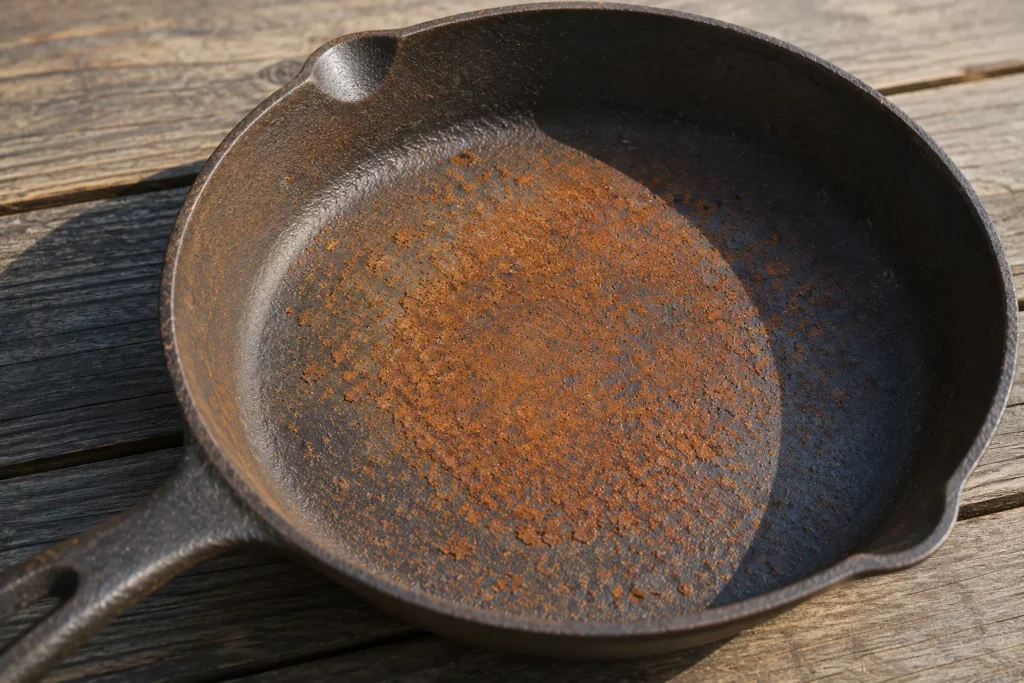
The major factors contributing to rusting in cast iron include air and moisture because it results in the oxidation process taking place on the surface of the iron. Whenever the layer of seasoning protecting your cast iron cookware gets destroyed or stripped away from the metal, then it becomes susceptible to rusting. Some of the reasons causing this to happen may be allowing the cookware to air dry, soaking it for long periods in water, or using abrasive cleaning materials that destroy the season.
Identifying Rusty Cast Iron Skillets
Determining if there is a rusted cast iron skillet is easy enough. Rust spots appear in the form of reddish-brown discolored cast iron, and this can either be in the form of small rust spots or even a big flaky rust covering all parts of the skillet. The presence of rust on the cast iron often means that the protective seasoning on the cast iron is worn out. This problem can occur both on vintage cast iron as well as regular cast iron.
Health Implications of Rust
Though it may not be dangerous to eat a little rust from a cast iron pan coated in rust, it is definitely not advisable. It is not the toxicity that one should be worried about; it is the bad taste that rust gives the food that makes it undesirable. In addition, if the pan is very rusted, then it means that the seasoning of the pan has been lost. It is important to restore the pan and make sure that there is no rust on the cooking surface.
Best Ways to Remove Rust from Cast Iron
Scrubbing Techniques for Rusty Cast Iron
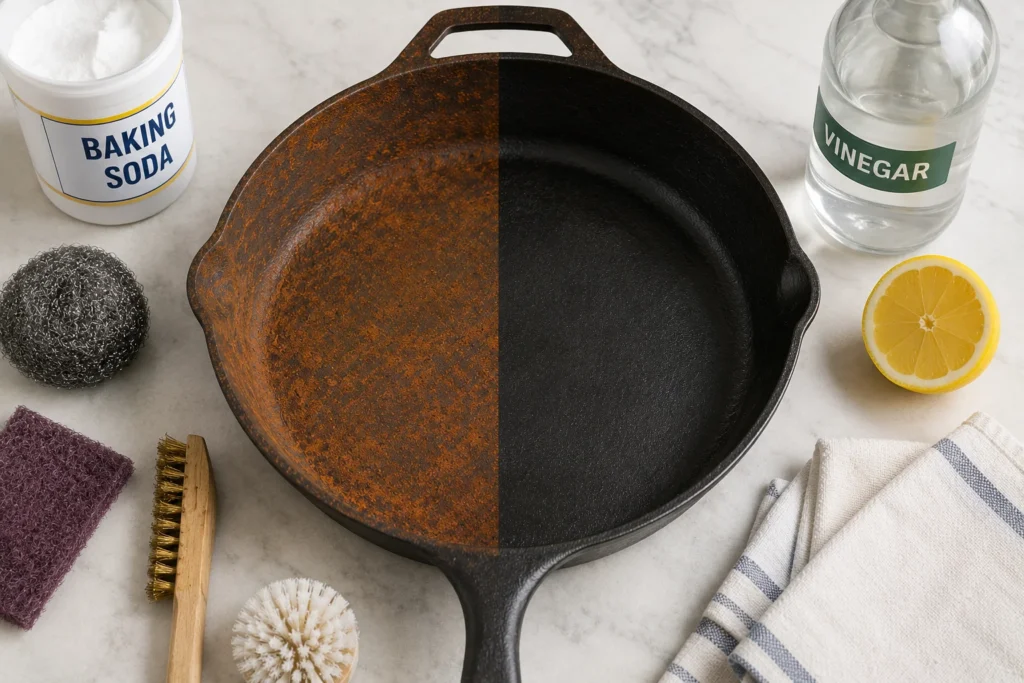
For the purpose of cleaning rust from a cast iron pan, there are different methods that can be used, particularly for rust removal on the surface of the cast iron or when there is only a little amount of rust present. When there is just a bit of rust, scrubbing using a hard brush and an abrasive cleaner will probably suffice. But when there is a tougher rust present, using steel wool or even a steel scourer might be more effective in getting rid of the rust without scratching the surface of the cast iron.
Chemical vs. Natural Rust Removal Methods
If you are dealing with rusted cast iron, then there is an option of either using chemical rust removal or natural rust removal. In the case of natural rust removal, the approach entails the use of soaking the rusted cast iron in a mixture of vinegar, which acts as a loosening agent to remove the rust from it. In cases where there is extensive rust, you can use chemical rust removers, but care needs to be taken during this process since all residues should be washed away to avoid corrosion of the cast iron pan.
Using an Oven to Remove Rust
Although not the main means of rust removal, placing cast iron in the oven could be considered the preparatory procedure for reviving cast iron with heavy rust stains. Some people decide to put their old rusted skillets in a self-cleaning cycle of the oven. As a result, the rust and seasoning on the skillet will be turned into ash due to extreme heat, which would make rust removal easier afterwards. It is important to note that this method should be applied with care since extreme heat might damage vintage cast iron.
Restoring Cast Iron Skillets
Cleaning the Cast Iron Surface
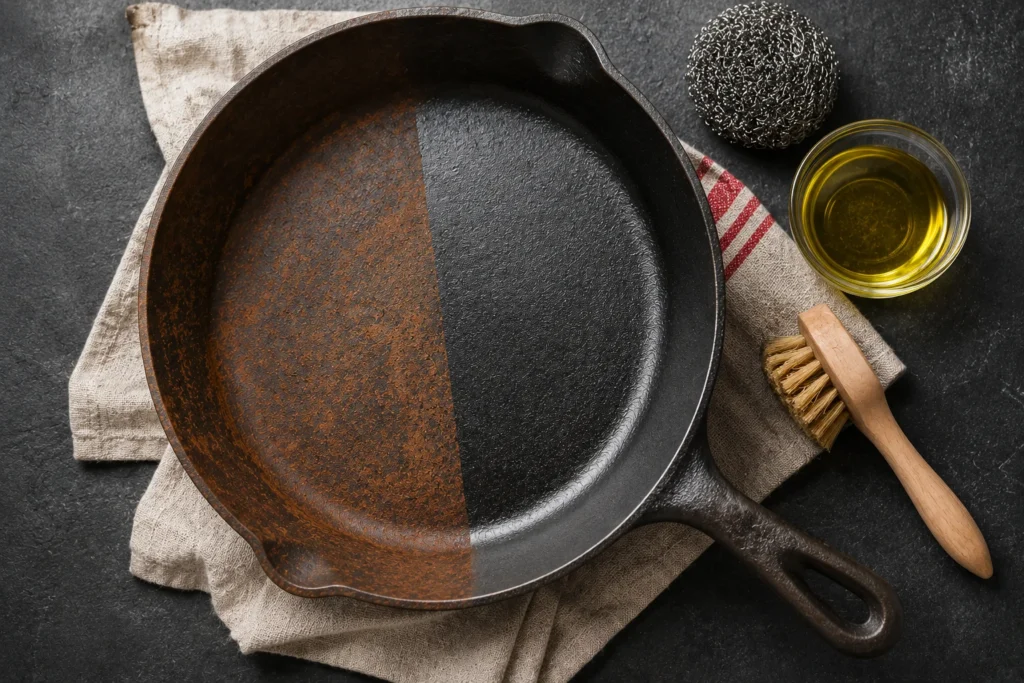
The removal of the rust marks the beginning of the next step that is equally important when trying to restore your cast iron skillet. The next step involves cleaning the cast iron. To do this, you need to rinse the pan with hot water and scrub it using a brush or a sponge in order to be sure that all residues and dirt have been cleaned. Even if you had used some soap while doing this cleaning, make sure to wash it off. After cleaning, it is extremely important to dry the cast iron pan immediately.
Proper Seasoning Techniques
Proper seasoning forms the basis of good maintenance of cast iron pans; that is, a strong layer which does not allow the food to stick and protects the cast iron from rusting. Clean and dry the pan, then apply a very thin and uniform layer of high smoke point oil on the surface of the cast iron pan, such as vegetable oil, grapeseed oil or flaxseed oil. Dry the excess oil using a paper towel and leave just a little amount of oil on the pan such that it becomes almost dry. Then, turn the cast iron pan upside down in the oven and bake it for one hour at a high temperature of about 450-500°F or 230-260°C.
Maintaining Your Restored Cast Iron
It’s important that you maintain your refurbished cast iron in order to keep it from rusting in the future and to extend its lifespan. The cast iron skillet needs to be washed thoroughly after use using hot water and a brush; harsh soaps should only be used if absolutely necessary since they may remove the seasoning. Immediately dry the cast iron after it has been cleaned; this can be done through placing the pan on the stove on a low flame or by wiping it down using a towel. A little cooking oil needs to be applied on the surface of the cast iron.
Vintage Cast Iron Care
Identifying Vintage Cast Iron Skillets
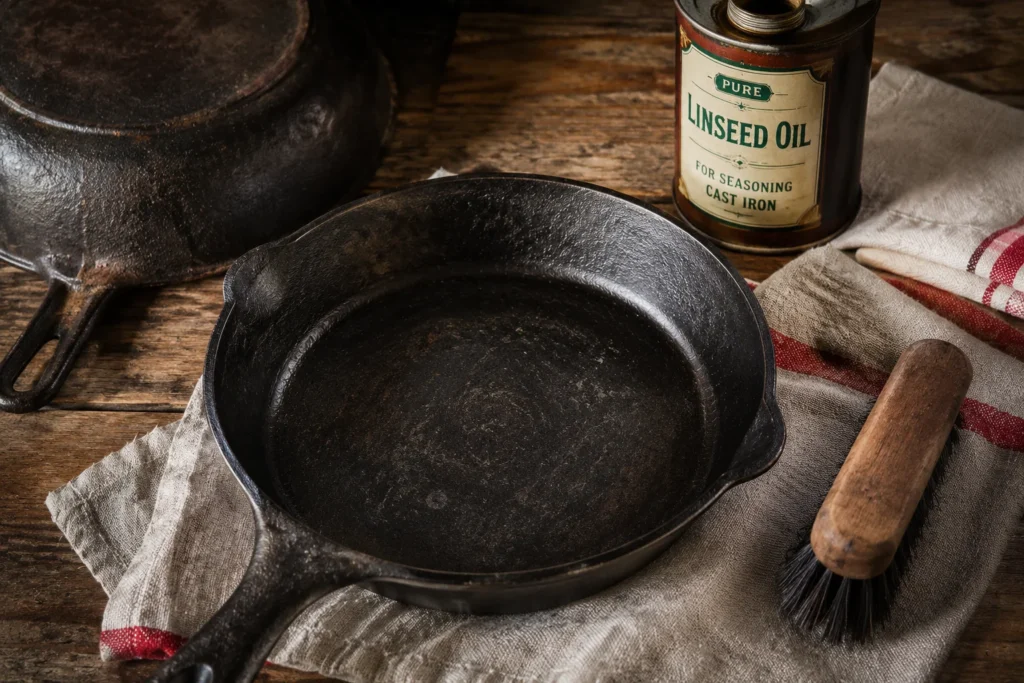
There are certain signs which help to identify old cast iron skillets including the marks made by their makers, handles design, and their overall patina. Contrary to cast iron products of contemporary times, vintage products usually feature more polished cooking surface owing to their manufacture process and accumulated layer of seasoning throughout decades. While it is perfectly normal for any cast iron to develop a little rust, it is no reason to reduce the value of a vintage cast iron product, as it simply means that there is a need to clean cast iron from rust.
Special Considerations for Restoration
Reviving old cast iron calls for careful handling, particularly when there is much rust involved. In contrast with new ones, old cast iron may be somewhat fragile, so very harsh measures such as putting the pan through a self-cleaning cycle would be unwise due to the risk of warping or breaking the piece. To handle a serious problem with rust, one of the most common solutions advised for removing rust from cast iron is the electrolysis method. Once rust is removed, covering the cast iron pan with several thin layers of seasoning oil becomes vital to protect it from rusting again.
Using Vintage Cast Iron Safely
The safe use of vintage cast iron basically depends on the process of cleaning and seasoning of the cast iron. Once your cast iron has been cleaned, you must ensure that there is a clean surface for cooking without any traces of rust and dirt left. It is also prudent to test if there is any lead poisoning on your cast iron especially for those which have not been used properly in the past. Once your vintage cast iron pan has been cleaned and seasoned, it will make for great cooking.
Preventing Rust on Cast Iron
Regular Maintenance Tips
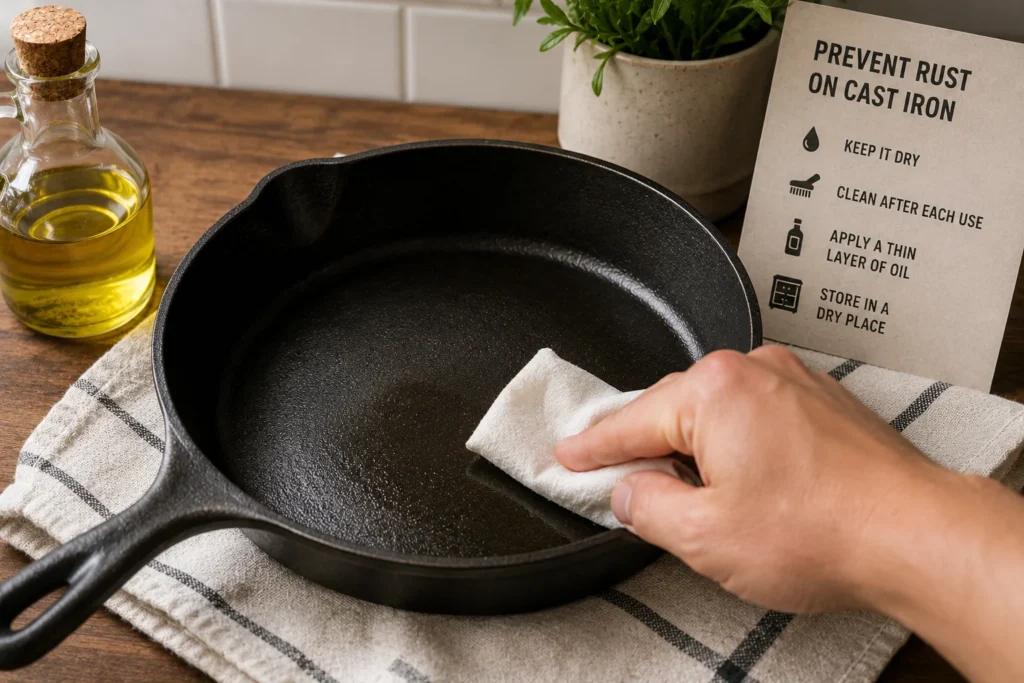
Cast iron is prone to rusting but can be avoided by storing the cast iron pans in an ideal way. Once your cast iron pan is dried thoroughly, coat a very light layer of vegetable oil on the whole cast iron surface. The seasoned coating serves as a protective shield from moisture. Cast iron skillets should be stored in a dry place where there is no presence of moisture. When storing more than one cast iron cookware, ensure that a piece of paper towel or fabric is placed in between to keep them rust-free.
Regular Maintenance Tips
Maintenance is the secret to ensuring that you have a cast iron that is rust free and in tip-top shape. Following each use, rinse the cast iron with warm water and brush; however, you can use soap if you really have to so as to ensure the integrity of the seasoning. As soon as the washing is done, ensure that the cast iron pan is dried out completely through either hand drying using a towel or drying out the pan using a stove set at low temperatures for some minutes. Once dried out, wipe a light coat of oil on the cast iron using a paper towel.
Using Cast Iron for Grilling
Cast iron is one of the best materials to use in case you wish to grill your food to perfection. Once you have grilled your food, there is a lot of caution required while handling cast iron since it is easy to form rust on the cast iron. Cast iron should be cleaned once it cools down. All areas should be thoroughly cleaned to ensure that any traces of burnt food are removed from the cast iron surface. Cast iron should not be left soaking in soapy water but rather rinsed using hot water. Cast iron should then be dried immediately. Vegetable oil may be applied to cast iron to prevent rusting.