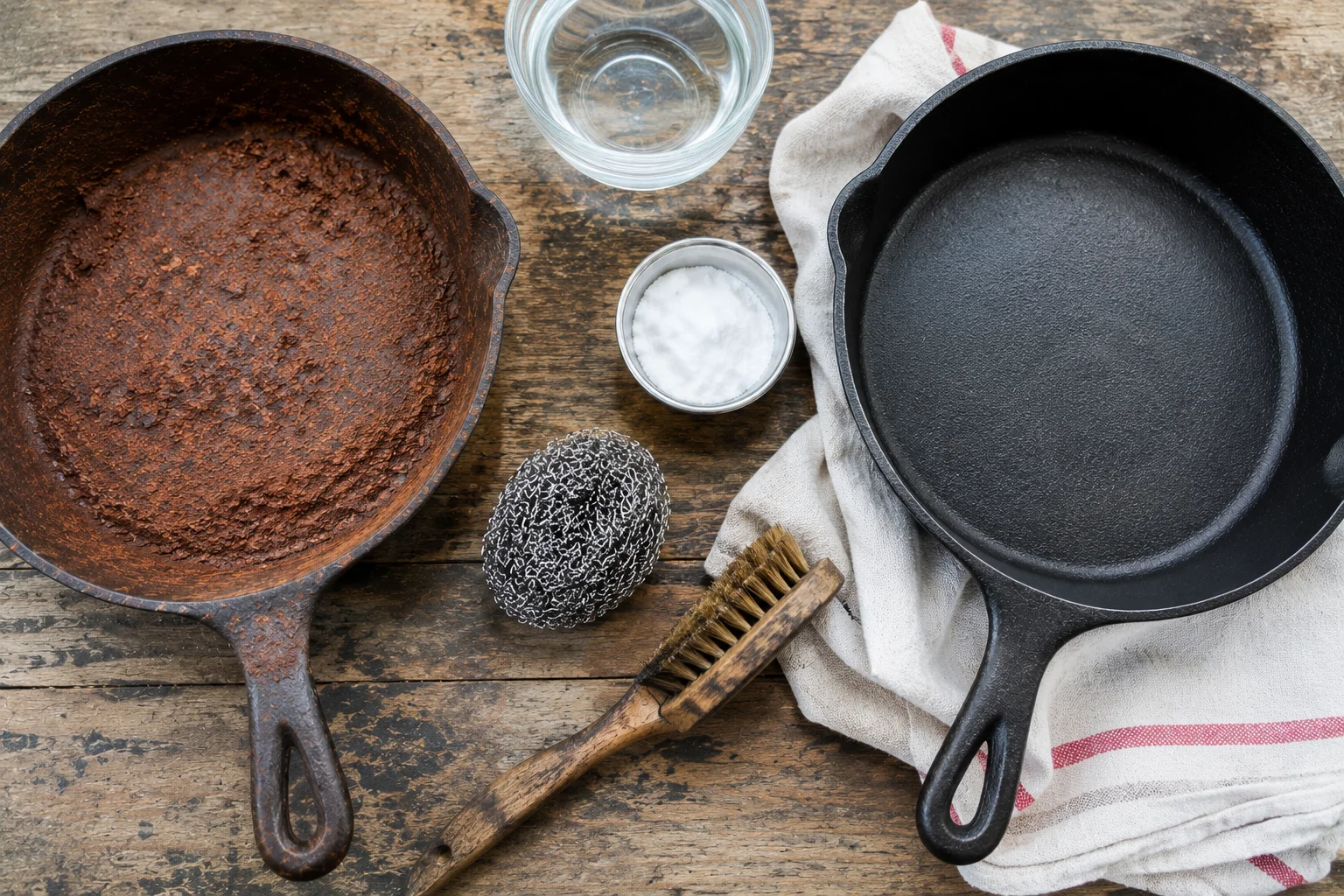
The appearance of rust on your prized cast iron skillet may be disappointing, but it’s a frequent problem that thankfully isn’t difficult to solve. This article will show you how to clean a rusty cast iron skillet and get it back to its previous condition, which means it’s going to continue giving you many delicious meals in the future. You’ll see how to:
1. Take care of the rust
2. Cook it again
3. Keep it safe from rusting again.
Understanding Cast Iron and Rust
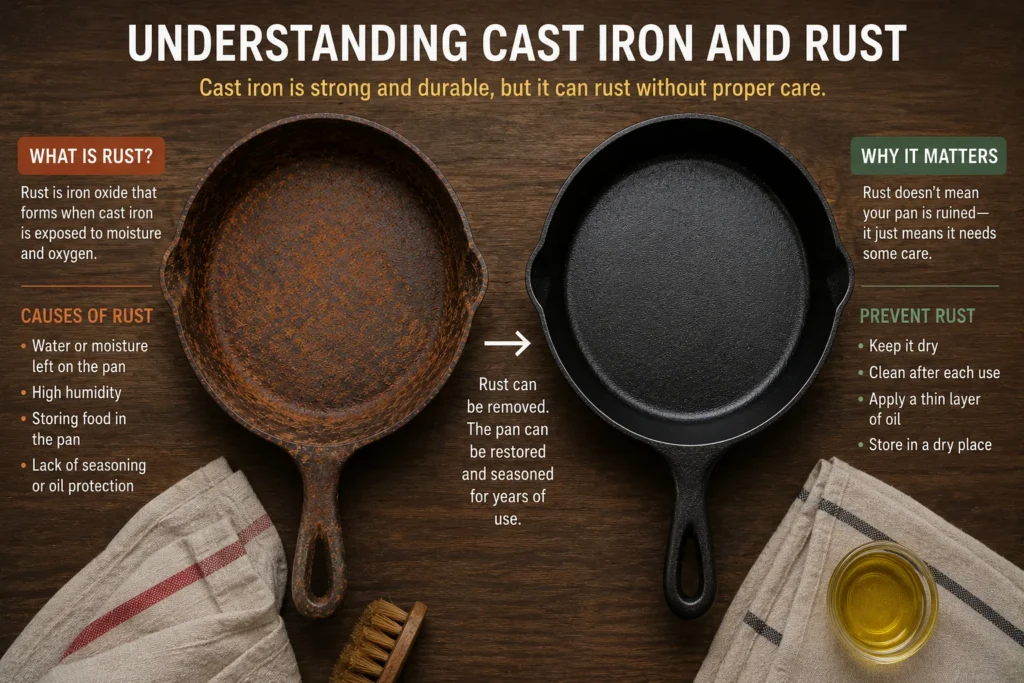
Cast iron is a very resilient metal that is loved by everyone for its property of retaining and distributing heat evenly. But due to the presence of high amounts of iron, it can easily get rusty. It is necessary to understand the properties of cast iron and know the reasons for rust formation in order to restore your cast iron pan to its best condition.
What Causes Rust in Cast Iron Skillets?
The main reason why cast iron pans develop rust is moisture. Whenever a cast iron pan is allowed to remain moist for a long time or the protective layer of seasoning is removed from the pan, there is an interaction between the iron in the cast iron pan and oxygen and water to form iron oxide or rust. Failure to have a proper seasoning layer or cleaning that removes the existing seasoning layer makes the iron pan prone to rust.
The Importance of Proper Seasoning
Seasoning is fundamental in maintaining cast iron cookware as it serves as a natural non-stick coating and as a critical protection against rust. Seasoning of cast iron is achieved through the process of heating layers of cooking oil to form a protective layer. When the cast iron pan is well seasoned, rust formation is prevented, and it becomes easier to cook as food will not stick to the pan.
Identifying Rusty Cast Iron Skillets
Recognizing a cast iron skillet with rust damage is fairly simple. The following signs are common when it comes to rusted cast iron cookware:
• Reddish/brown patches or discoloration of the entire surface of the pan
• Having a rough surface when touched in those places
Just a tiny bit of rust on cast iron means that its seasoning layer is damaged and the cookware requires some effort for it to be restored.
Steps to Remove Rust from Your Cast Iron Skillet
Gathering the Right Tools for Scrubbing
Prior to embarking on your adventure of rust removal of your cast iron skillet, it is important to collect the right set of tools. In order to get rid of the rust, you will require a good scrubber that will be able to handle the job without damaging the bare metal too much.
To make the whole process of rust removal easy for yourself, you should have the following things ready:
• Scrubber
• Dish Soap
• White Vinegar
• Towel
Techniques for Effective Rust Removal
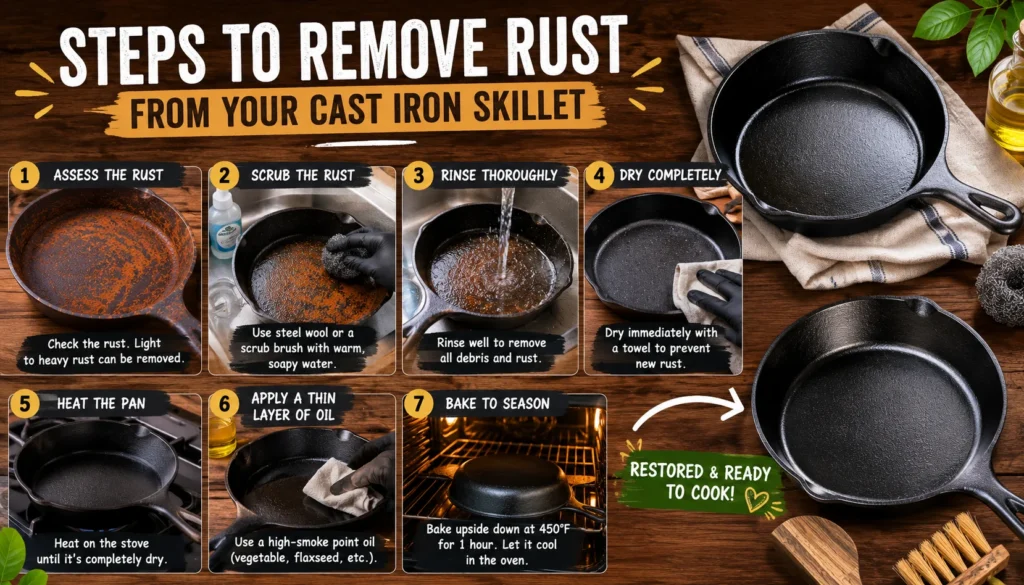
There are different methods you may use to clean rust off your cast iron pan, based on how badly rusted the cast iron is. In case of slight rust on your cast iron pan, you may clean the rust by using steel wool and soap water. If the rust is difficult to clean, you may need to use a vinegar solution. You can prepare the solution by mixing water and vinegar in equal measures and letting the rusty cast iron pan sit in the mixture for some time.
Drying Thoroughly After Cleaning
After you have succeeded in removing all the rust from the cast iron pan and rinsing it properly, drying is the most important step you should take. Otherwise, the presence of water in your pan may result in the development of additional rust and spoil all your efforts. To begin with, you should dry the pan using a dry cloth. Additionally, put your cast iron pan on the stove and leave it there for several minutes over low heat to make sure there is no moisture left.
Restoring and Seasoning Your Cast Iron Skillet
Applying Oil for Seasoning
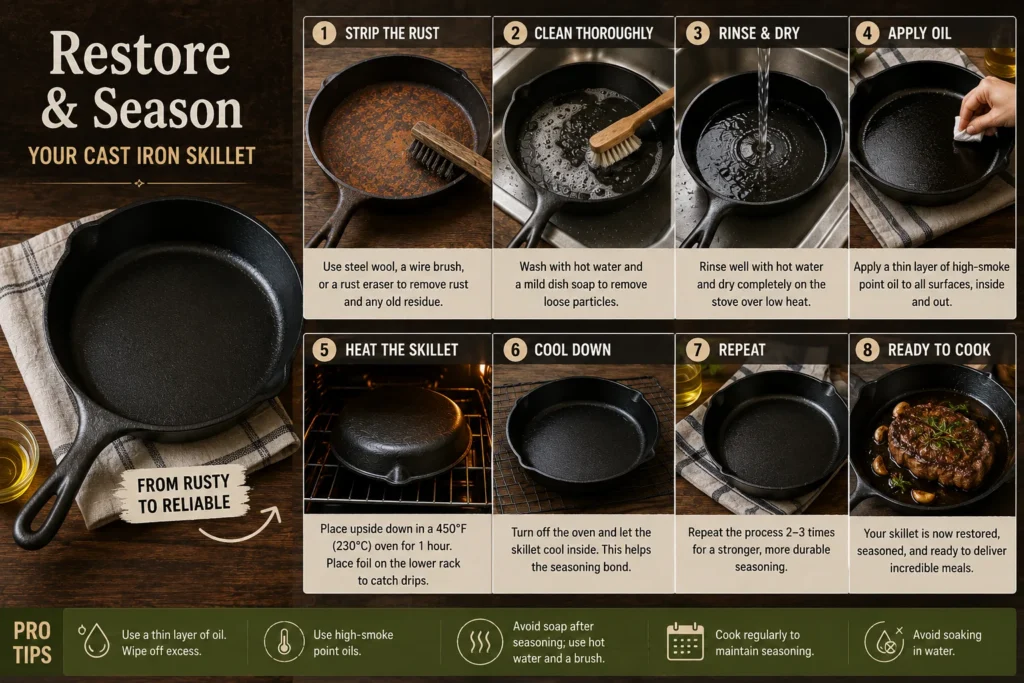
Once you have carefully cleaned and dried your cast iron pan, the important process of reseasoning starts. The process of applying a very thin coat of oil on your cast iron pan starts now. The oils that could be used are vegetable oil, flaxseed oil, and even lard. It is important to remove any extra oil from your pan using a towel because excessive amounts of oil could give you a sticky coating. This coating of oil is the basis of the new protective coating.
Baking for 1 Hour: The Seasoning Process
Once you have carefully cleaned and dried your cast iron pan, the important process of reseasoning starts. The process of applying a very thin coat of oil on your cast iron pan starts now. The oils that could be used are vegetable oil, flaxseed oil, and even lard. It is important to remove any extra oil from your pan using a towel because excessive amounts of oil could give you a sticky coating. This coating of oil is the basis of the new protective coating.
Maintaining Your Restored Vintage Cast Iron
It is crucial that you maintain the seasoning of the newly renovated cast iron pan for the continued preservation of its new seasoning and keep the risk of rusting at bay. The cast iron pan should be cleaned right after every usage with hot water and a stiff brush or soft scouring pad, but avoid the use of abrasive soap whenever possible. It is to be dried out immediately after washing either with a dry towel or by placing it on the stovetop under low flame.
Cooking with Your Restored Cast Iron Skillet
Best Practices for Cooking with Cast Iron
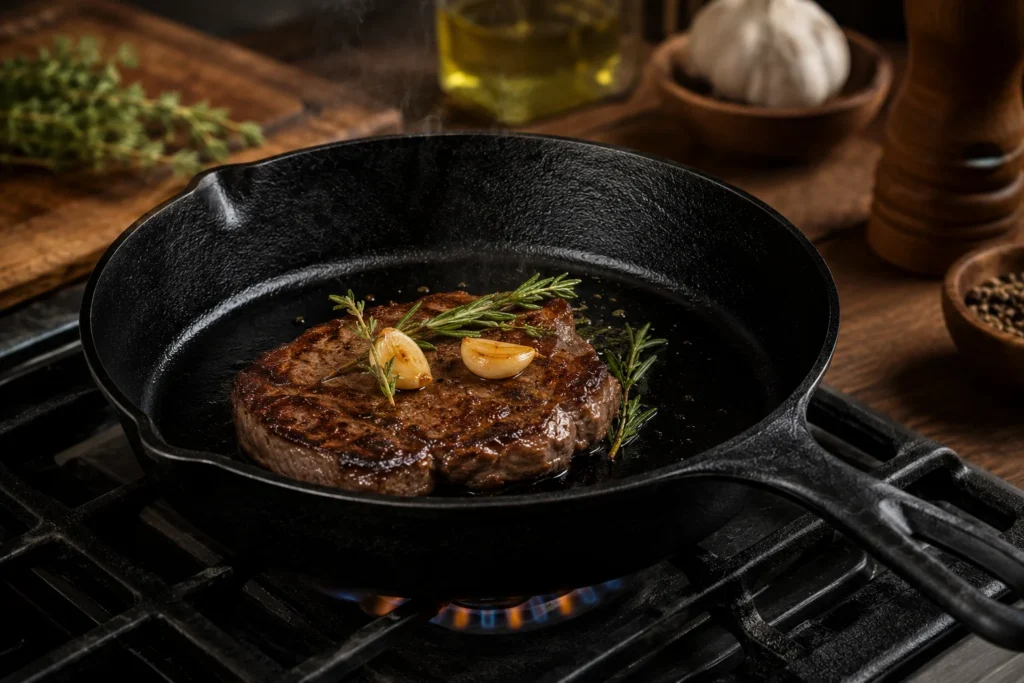
In order to maximize the benefits of your restored cast iron skillet, always make sure that you slowly heat up the cookware on medium heat prior to cooking anything in it. This is important to ensure even heating and also avoid any sticking issues. Always avoid using acidic ingredients such as tomato sauce and lemon juice when using a freshly seasoned cast iron skillet since it will end up removing the season layer in the skillet. It is important to use only wooden or silicone utensils for protection of the cookware surface.
Recipes to Try in Your Restored Pan
Now your pan is restored, and it is time to get started on a variety of tasty culinary experiments. Begin with basic dishes that require even heating and the development of a crust – pan-sear a piece of meat, brown some roasted veggies, and make yourself a cornbread. Not only will it be a pleasure to consume them, but each dish you prepare will contribute to building up a coating that makes your cast iron pan non-stick and protects it from rust in the future.
Long-term Care to Prevent Future Rust
The importance of long-term care should be stressed if you want your cast iron skillet to stay with you and your descendants for decades without ever getting rusty. It is very important to dry the skillet properly after every use, preferably by drying it on the stove using low fire until it is completely dried out. Keep your cast iron pan dry, and think about putting a paper towel in it in order to avoid any moisture inside. Re-seasoning of your pan on a regular basis is very important for rust prevention.