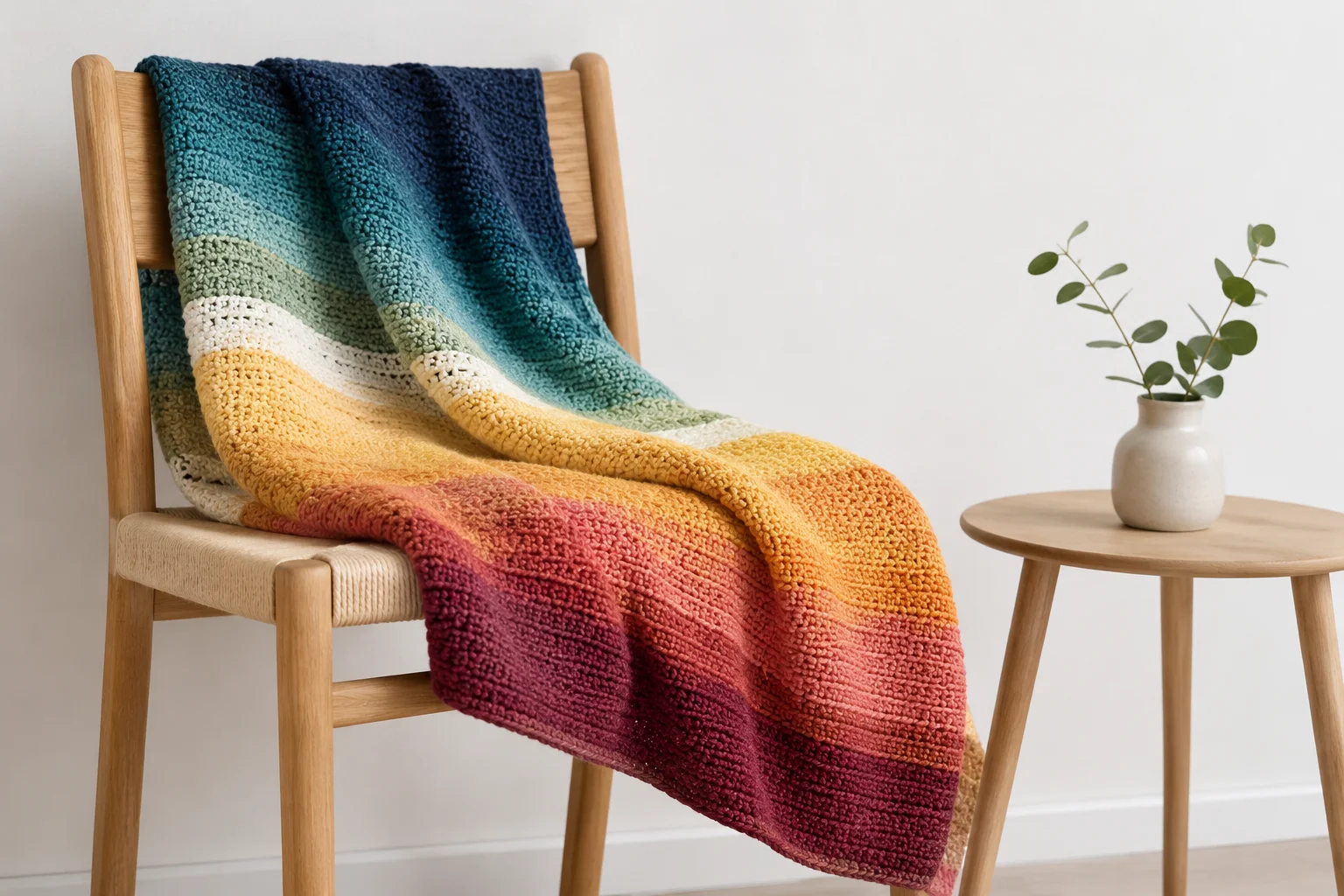
Venture out on a journey of creativity and experience a whole year of weather conditions in a visual representation using a temperature blanket. Follow this guide to learn everything there is about creating your first temperature blanket project either by crocheting or knitting.
Understanding Temperature Blankets
What is a Temperature Blanket?
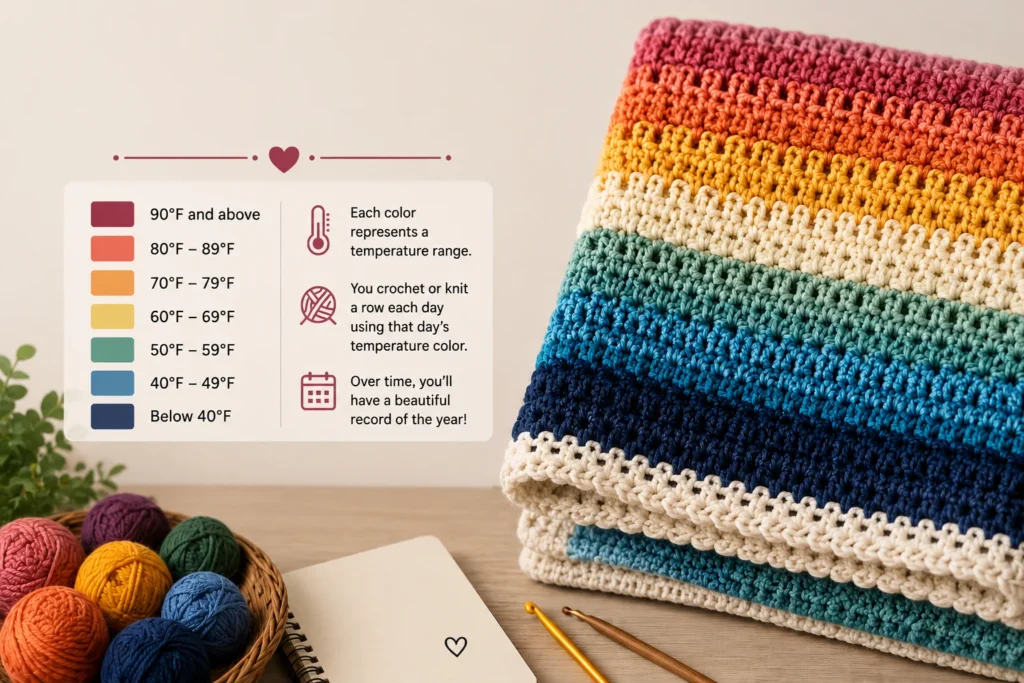
Temperature blankets are an individualized and unique craft work. They act as a bright visual chronology of weather changes during the whole year, where the design depends on the temperature changes during the year. Main features of the temperature blanket are:
• Each row or block symbolizes a particular period of time (day).
• The color of each block depends on the temperature of the particular day.
No matter whether you prefer knitting or crocheting, the choice of yarn color is important because it will represent different temperatures.
Historical Significance of Temperature Blankets
Although there has been an increase in popularity of the modern temperature blanket with the advent of social media, the idea of turning data into patterns is based on traditional arts and cultures in different ways. In many cases, early methods of data recording were through traditional craft, which included subtle patterns related to seasons or dates. However, in the case of the modern temperature blanket, one can clearly see temperature variations on a daily basis.
How Temperature Blankets Work
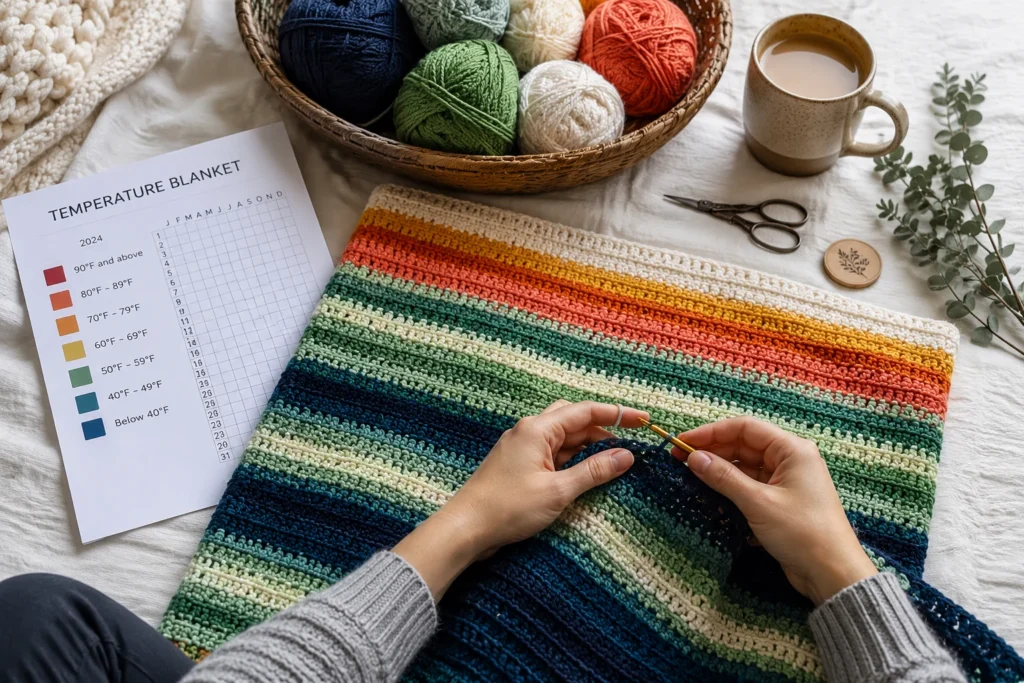
In order to create a temperature blanket, one needs to begin by identifying a full temperature range expected for the time period one wishes to cover, usually a year. Next, the temperatures are broken up into smaller increments of degrees, and each increment of degree is assigned a particular yarn color. For instance, light blue can be used to denote 0-9 degrees Fahrenheit, whereas deep red may be used to denote 90-99 degrees Fahrenheit. On each day, one identifies the highest temperature or the average temperature for that particular day and uses the appropriate yarn color to crochet or knit a particular section.
Planning Your Temperature Blanket
Choosing Your Yarn Colors
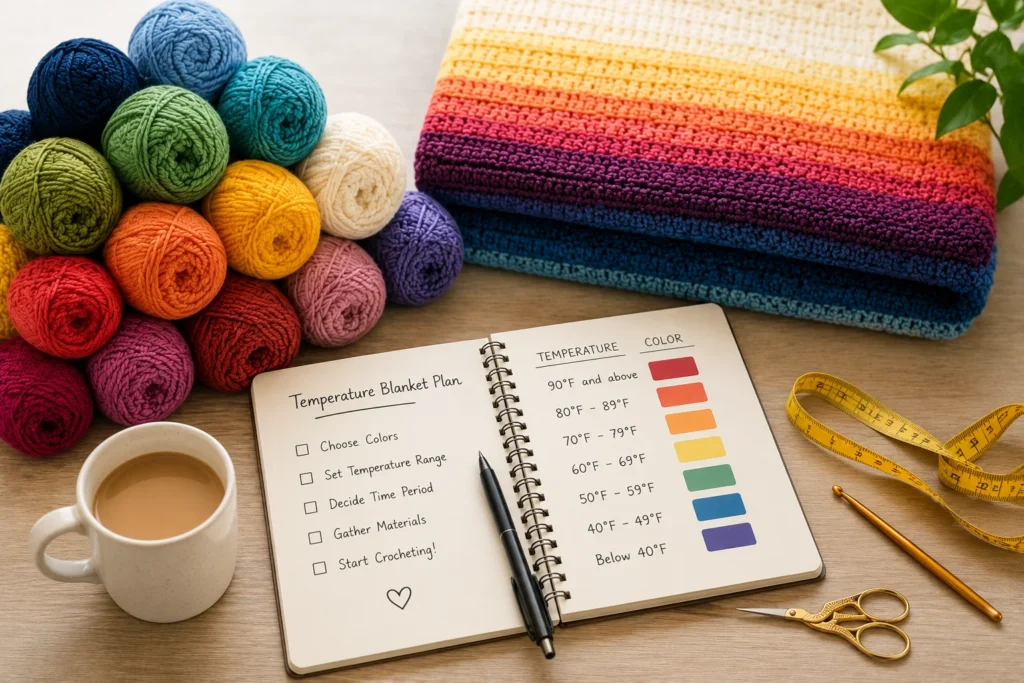
Color choice is perhaps the most critical part of your temperature blanket planning process. Your choice of colors will be a determining factor in how appealing your blanket will be in general. Most people choose a gradient of colors, where cool blue and green colors represent low temperatures while yellow, orange, and red colors represent high temperatures. Some things to keep in mind when selecting your colors include:
• Personal preferences in your color choices.
• The fact that each color will represent a certain range of temperatures.
Setting Up Your Daily Temperature Scale
It is essential to first create your daily temperature scale for the success of your temperature blanket. You will need to find the maximum temperature that can occur and the minimum temperature at that particular place in that particular year. The whole temperature scale needs to be divided in terms of degrees in a convenient way such as 5 to 10 degrees Fahrenheit or Celsius. After this, each of these degrees will have their own color of yarn.
Deciding on the Size of Your Blanket
There are several things that help determine the size of your temperature blanket. First, the number of days in which you would like to record your daily temperatures will help you decide on how many rows or stripes you need in your blanket (365/366 rows). You can think about which bed size do you like better – whether it’s a twin, full, or a queen-size bed. It will affect the size of your beginning chain and the amount of yarn needed.
Knitting or Crocheting Your Temperature Blanket
Best Techniques for Knitting a Temperature Blanket
While knitting temperature blankets, there are many different techniques which may be used in order to get different textures and effects. Think about the drape you want to achieve while making your first temperature blanket, since the choice of stitch will have a great impact on the final effect of your project. Among the easiest and most drapeable options are:
• Garter stitch
• Stockinette stitch
If you prefer something more complicated, there are different knits or crochets, such as linen stitch.
Essential Stitches for Crochet Temperature Blankets
There are various stitches that can be incorporated when crocheting a temperature blanket to get a unique feel. Some of these basic stitches include the single crochet, half double crochet, or the double crochet stitches. Other stitches that can be used to achieve the complex look of your choice include the moss stitch or the Tunisian crochet that is similar to knitting. You can try out several stitches before settling on the one you will use for your blanket from a free pattern.
Choosing the Right Weight Yarn for Your Project
The selection of the right weight yarn is crucial when choosing materials for your temperature blanket. The worsted weight yarn is a widely used option because of its flexibility and the availability of a variety of colors, usually Lion Brand. The DK weight yarn has a softer drape, whereas chunky weight yarn will produce a warmer, heavier blanket. You should take into account the climate you are tracking and how warm you want your blanket to be. It is advisable to use acrylic yarn since it will last long.
Executing Your Blanket Project
Daily Updates and Progress Tracking
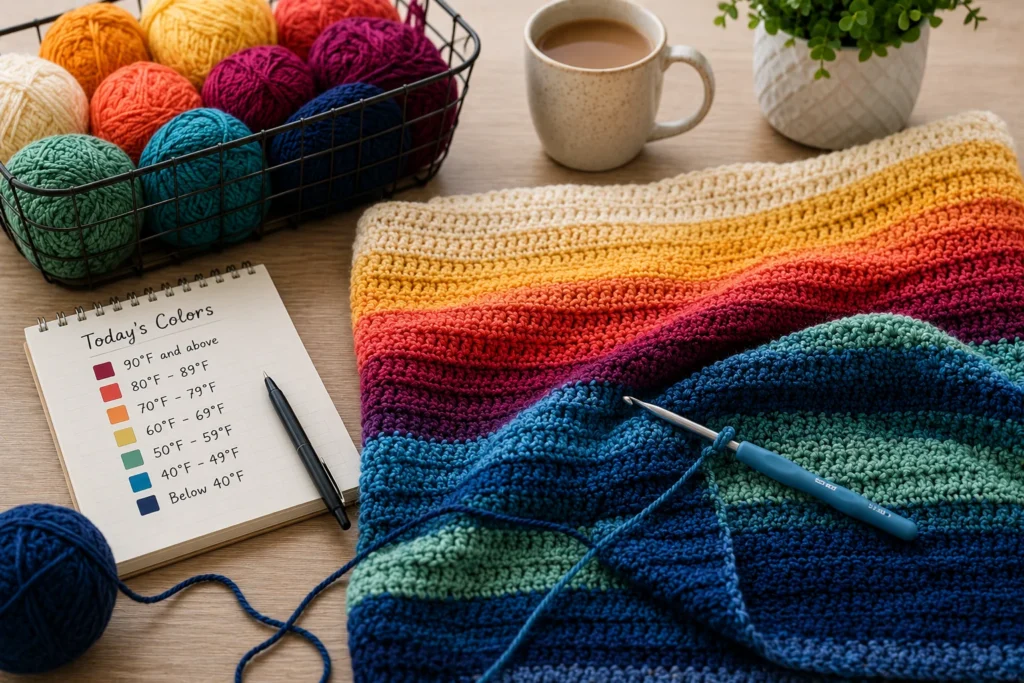
Keeping track of your daily temperature readings is critical to ensuring that you carry out your temperature blanket project effectively. Allocate time every day for checking the highest temperature in your selected place. The majority of craftspeople keep records of their daily temperatures using a notebook, spreadsheets, or an application for the purpose. It is essential to immediately convert your temperature data into rows of your temperature blanket to avoid accumulating too many days in a row.
Tips for Staying Motivated Throughout the Project
Working on an annual knitting or crocheting project such as a temperature blanket requires determination. The project needs to be divided into smaller and more achievable objectives; you might think of working on a weekly or monthly basis. Your friends who knit and crochet can help you keep motivated by being part of your support group both online and offline. Do not forget the sentimental aspect of your first temperature blanket and the fact that it will be your own unique record for a year.
Free Patterns for Temperature Blankets
Locating a free pattern can turn out to be one of the best ways to start your temperature blanket journey. There is a lot of choice available at websites such as Ravelry, Pinterest, and different crafting blogs regarding the knitting and crochet temperature blanket patterns. There are some patterns that will tell you how to pick up the right yarn, how to establish your temperature range, and even how to choose from stitch patterns, such as moss or linen stitches.
Finishing Touches and Care
How to Properly Finish Your Temperature Blanket
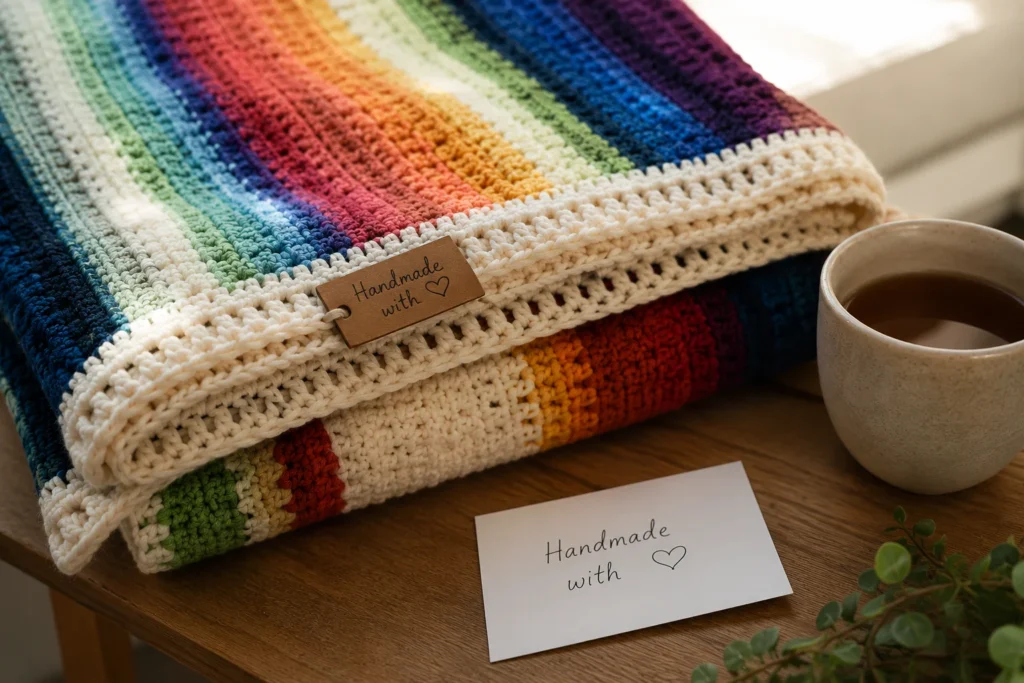
It is important to ensure that you finish off your temperature blanket properly to make sure it lasts a long time and looks good. Once you have completed all the 365 or 366 rows for the temperatures on each day, tie up all the loose ends of your yarn by weaving them in using a yarn needle. This will make sure that it does not unravel. Adding borders to your completed temperature blanket project will add extra definition to your colors.
Washing and Maintaining Your Blanket
Caring for your temperature blanket ensures it remains a cherished keepsake for years to come. If you’ve used acrylic yarn, most machine washing instructions suggest a gentle cycle with cold water and a low tumble dry. Always refer to the yarn label for specific care instructions, especially if you’ve incorporated different fiber types or a blend. Proper maintenance will preserve the integrity of your knit or crochet stitches and the vibrancy of your yarn colors, keeping your historical weather data blanket looking fresh
Displaying or Gifting Your Finished Project
The temperature blanket that you have finished making is an expression of the hard work and commitment of the past year and is a rare record of weather history. It doesn’t matter whether you hang it over a couch, fold it up on your bed, or even make it into a wall hanging because there is no doubt that you will get plenty of conversation from people once you have made it. You can also give away your temperature blanket as a gift for someone special in your life.